Everything You Need to Know to Plan Your First Yosemite Adventure
Towering granite cliffs, thundering waterfalls, ancient giant sequoias, and breathtaking mountain scenery make Yosemite National Park one of California’s most extraordinary destinations.
Whether you’re planning a weekend getaway, a family vacation, or your first national park adventure, Yosemite offers unforgettable experiences throughout the year.
But with nearly 1,200 square miles to explore, knowing where to go, what to see, and how to plan your time can feel overwhelming.
This ultimate Yosemite National Park travel guide covers everything you need to plan a memorable visit, from the best attractions and hiking trails to parking, accommodations, seasonal travel tips, and essential visitor services.
Planning Your First Trip to Yosemite
Where Is Yosemite National Park?
Yosemite National Park is located in California’s Sierra Nevada mountains, approximately 170 miles east of San Francisco and 60 miles north of Fresno.
Most first-time visitors focus on Yosemite Valley, where you’ll find many of the park’s famous landmarks, including El Capitan, Half Dome, Yosemite Falls, and Bridalveil Fall.
Yosemite has several main entrances:
- South Entrance (Highway 41): Best for visitors traveling from Fresno, Oakhurst, or Southern California.
- Arch Rock Entrance (Highway 140): Convenient for visitors coming from Merced, Mariposa, and El Portal.
- Big Oak Flat Entrance (Highway 120): Popular with travelers arriving from the San Francisco Bay Area and Northern California.
- Tioga Pass Entrance (Highway 120 East): A seasonal entrance for travelers arriving from Lee Vining and the Eastern Sierra.
Travel tip: Yosemite is much larger than it appears on a map. Driving between major attractions can take an hour or longer, even without traffic.
When Is the Best Time to Visit Yosemite?
Every season brings something special to Yosemite.
| Season | What to Expect |
|---|---|
| Spring (March–May) | Powerful waterfalls, green meadows, and lingering mountain snow |
| Summer (June–August) | Warm weather, accessible high-country roads, and busy trails |
| Fall (September–November) | Fewer crowds, colorful foliage, and generally lower waterfall flows |
| Winter (December–February) | Snow-covered landscapes, peaceful scenery, and limited high-elevation access |
Our recommendation: May and June are excellent for waterfalls, while September and October are ideal for travelers who prefer fewer crowds and comfortable hiking conditions.
Keep in mind that Glacier Point Road and Tioga Road typically close during winter because of snow. Their opening dates vary each year.
Top Things to See and Do in Yosemite
If this is your first visit, start with these unforgettable attractions.
1. Explore Yosemite Valley
Yosemite Valley is the heart of the park and the best starting point for first-time visitors.
Surrounded by towering granite cliffs and spectacular waterfalls, the valley provides easy access to some of Yosemite’s most recognizable landmarks.
Must-see attractions include:
- El Capitan and El Capitan Meadow
- Yosemite Falls
- Cook’s Meadow
- Sentinel Bridge, with views of Half Dome
- Bridalveil Fall
- Valley View
Plan your visit:
- Time needed: 4–6 hours for sightseeing and short walks.
- Parking: Yosemite Village Parking, Yosemite Falls Parking, or Curry Village Parking.
- Best arrival: Before 8 AM during busy periods, and preferably before 9 AM throughout the peak season.
- Difficulty: Mostly easy, with paved paths and short walking trails.
- Accessibility: Yosemite Valley is accessible year-round, although snow and ice can affect some trails.
Insider tip: Once you find parking, leave your car there and explore using the free Yosemite Valley shuttle, walking paths, or bicycles. Parking can fill early, and driving between attractions may consume valuable sightseeing time.
2. Visit Yosemite Falls
Yosemite Falls is one of the tallest waterfalls in North America, plunging 2,425 feet in three sections.
For first-time visitors, the Lower Yosemite Fall Trail provides an easy and rewarding experience.
- Trail distance: 1 mile round trip (loop).
- Difficulty: Easy.
- Time needed: 30–45 minutes.
- Parking: Yosemite Village or Yosemite Falls Parking; use the shuttle or walk to the trailhead.
- Best time: Morning, particularly during spring.
- Seasonal access: Open year-round, but icy conditions are possible in winter.
Yosemite Falls is most impressive in spring and early summer. By late summer or early fall, the waterfall may slow considerably or dry up.
Nearby attractions: Cook’s Meadow, Yosemite Village, and the Yosemite Exploration Center.
3. Experience Tunnel View
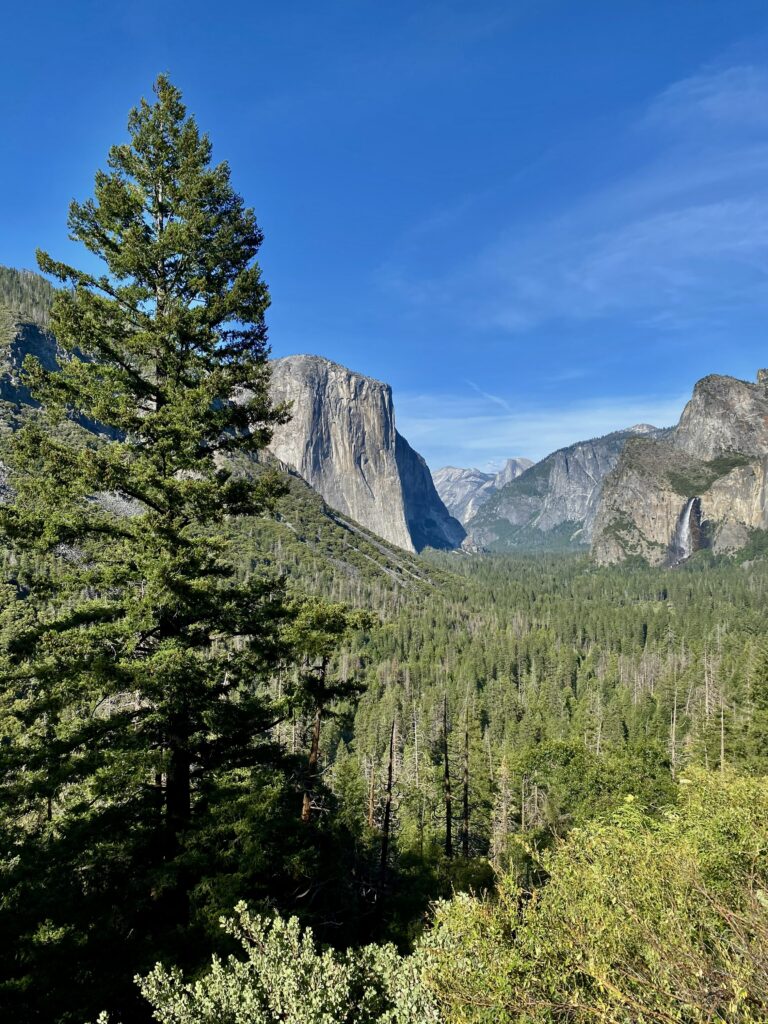
Tunnel View is one of Yosemite’s most famous viewpoints, offering a spectacular panorama of El Capitan, Bridalveil Fall, and Half Dome.
It’s often the first breathtaking view visitors encounter when entering Yosemite Valley from Highway 41.
- Time needed: 15–30 minutes.
- Parking: Designated Tunnel View parking areas along Wawona Road.
- Difficulty: Easy, with viewing areas close to parking.
- Best time: Early morning for lighter crowds or late afternoon for dramatic lighting.
- Seasonal access: Accessible year-round, weather permitting.
Travel tip: Stop at Tunnel View on your way into Yosemite Valley if you’re arriving from the South Entrance. It’s an ideal introduction to the park and one of its best photography locations.
4. Discover Glacier Point
Glacier Point offers some of Yosemite’s most spectacular panoramic views, overlooking Yosemite Valley, Half Dome, and the surrounding Sierra Nevada mountains.
Unlike strenuous summit hikes, this viewpoint can be reached by car when Glacier Point Road is open.
- Time needed: 45–60 minutes at the overlook.
- Parking: Glacier Point parking area.
- Difficulty: Easy, with a short paved path to the viewpoint.
- Best time: Early morning or late afternoon.
- Seasonal access: Generally late May through October or November, depending on snow conditions.
Allow approximately one hour to drive to Glacier Point from Yosemite Valley, each way.
Nearby attractions: Washburn Point, Taft Point, and Sentinel Dome.
Travel tip: Glacier Point is best planned as a separate half-day excursion rather than a quick stop while exploring Yosemite Valley.
5. Walk Among Giant Sequoias at Mariposa Grove
Located near Yosemite’s South Entrance, Mariposa Grove is home to hundreds of mature giant sequoias, including the famous Grizzly Giant.
Walking among these enormous trees is one of Yosemite’s most memorable experiences.
- Time needed: 2–3 hours, including shuttle transportation and a shorter walk.
- Parking: Mariposa Grove Welcome Plaza near the South Entrance.
- Difficulty: Easy to moderate, depending on the chosen trail.
- Best time: Morning, before parking and trails become crowded.
- Seasonal access: The grove is accessible throughout the year, but the shuttle operates seasonally, generally spring through fall.
When the shuttle isn’t operating, visitors must walk approximately two additional miles each way to reach the grove.
Nearby attractions: Wawona, the historic Wawona Hotel area, and the Yosemite History Center.
6. Hike Yosemite’s Scenic Trails
Hiking is one of the best ways to experience Yosemite beyond its famous roadside viewpoints.
Fortunately, you don’t need to be an experienced hiker to enjoy some of the park’s most beautiful scenery.
| Trail | Distance (Round Trip) | Difficulty | Estimated Time |
|---|---|---|---|
| Bridalveil Fall | 0.5 mile | Easy | 20–30 minutes |
| Lower Yosemite Fall | 1 mile | Easy | 30–45 minutes |
| Cook’s Meadow Loop | 1 mile | Easy | 30–45 minutes |
| Mirror Lake | 2 miles to lake and back | Easy–Moderate | 1–1.5 hours |
| Vernal Fall Footbridge | 1.6 miles | Moderate, uphill | 1–1.5 hours |
| Top of Vernal Fall via Mist Trail | 2.4 miles | Strenuous | About 3 hours |
For the Vernal Fall hikes, begin at Happy Isles in eastern Yosemite Valley (shuttle stop 16). The Mist Trail has steep, wet steps during waterfall season, and sections may close seasonally.
First-time visitor tip: Choose one or two shorter hikes rather than attempting several challenging trails in a single day. You’ll have more time to enjoy the scenery without feeling rushed.
Where to Stay in Yosemite
Choosing the right accommodations can make a significant difference in your Yosemite experience.
Staying Inside Yosemite National Park
Staying inside the park provides convenient access to major attractions and reduces daily driving.
Popular options include:
- Yosemite Valley Lodge: Convenient for Yosemite Falls and exploring Yosemite Valley.
- Curry Village: Cabins and tent-style accommodations near Half Dome and popular hiking trails.
- The Ahwahnee: A historic hotel offering an upscale Yosemite experience.
- Yosemite Campgrounds: Ideal for visitors who prefer camping and outdoor adventures.
Accommodations inside the park often sell out months in advance, especially during summer and holiday periods.
Staying Outside Yosemite
Several gateway communities offer hotels, vacation rentals, cabins, and other lodging options.
| Location | Best For |
|---|---|
| El Portal | Convenient access through Arch Rock Entrance |
| Mariposa | Restaurants, historic downtown, and lodging variety |
| Oakhurst | Families, shopping, dining, and South Entrance access |
| Fish Camp | Cabins and accommodations near Mariposa Grove |
| Groveland | Visitors approaching from Northern California |
Travel tip: If you plan to spend most of your time in Yosemite Valley, consider accommodations that minimize driving. A cheaper hotel farther away may mean several additional hours on the road over a multi-day trip.
Getting Around Yosemite: Parking and Transportation
Parking and traffic are among the biggest challenges for first-time Yosemite visitors, especially during summer weekends and holidays.
Where Should You Park?
For most first-time visitors exploring Yosemite Valley, these are the primary parking areas:
- Yosemite Village Parking: Convenient for the welcome center, village services, and Yosemite Falls.
- Yosemite Falls Parking: Useful for Yosemite Falls and western Valley sightseeing.
- Curry Village Parking: Convenient for eastern Valley attractions, shuttle access, and nearby trailheads.
During busy periods, try to arrive before 8 AM. Parking can be limited or full by midmorning.
Using the Yosemite Valley Shuttle
Yosemite offers a free shuttle system connecting many popular valley attractions, trailheads, lodging areas, and visitor services.
The shuttle is particularly useful for reaching the Happy Isles trailhead, Yosemite Village, and Curry Village.
However, buses can become crowded during peak periods. Walking or cycling between nearby attractions may be faster.
For travelers who prefer not to drive into the park, the Yosemite Area Regional Transportation System (YARTS) provides bus service from several gateway communities, with routes and schedules varying by season.
Essential Yosemite Visitor Services
A little preparation can make your visit significantly more comfortable.
Visitor information: Stop at the Yosemite Valley Welcome Center near Yosemite Village for maps, ranger recommendations, and current park information. The nearby Yosemite Exploration Center offers educational exhibits about the park.
Food and groceries: Yosemite Village, Curry Village, and Yosemite Valley Lodge offer dining or food-shopping options, depending on operating schedules. Bringing snacks or a picnic is especially helpful during busy days.
Gas and EV charging: There are no gas stations in Yosemite Valley. Gas is available at Wawona, Crane Flat, and El Portal. EV charging is available at selected park locations.
Restrooms and drinking water: Facilities are available around major visitor areas and developed trailheads, but availability becomes more limited in remote areas.
Cell service: Coverage can be unreliable, particularly outside Yosemite Valley. Download offline maps before arriving.
Entrance fees and reservations: Yosemite charges an entrance fee, and requirements may change between years. Check the official National Park Service website before your trip for current fees, reservations, and entry requirements.
Suggested Yosemite Itinerary for First-Time Visitors
If you only have one day in Yosemite, focus on Yosemite Valley rather than trying to visit every major destination.
Here’s a practical itinerary for visitors arriving through the South Entrance.
| Time | Activity |
|---|---|
| 7:00–8:00 AM | Enter the park and stop at Tunnel View |
| 8:00–9:00 AM | Park in Yosemite Valley and explore Cook’s Meadow |
| 9:00–10:00 AM | Walk the Lower Yosemite Fall Trail |
| 10:00–11:30 AM | Visit Yosemite Village and enjoy nearby views |
| 11:30 AM–12:30 PM | Lunch or picnic |
| 12:30–2:30 PM | Explore El Capitan Meadow and Valley viewpoints |
| 2:30–4:00 PM | Visit Bridalveil Fall or enjoy another easy walk |
Important: This schedule is a flexible example for a day beginning inside or near the park. Allow additional travel time if staying outside Yosemite, and adjust the order for traffic, road restrictions, and parking availability.
How Many Days Do You Need?
- One day: Explore Yosemite Valley, waterfalls, and famous viewpoints.
- Two days: Add Glacier Point or Mariposa Grove, depending on seasonal access.
- Three days: Explore Yosemite Valley, Glacier Point, and Mariposa Grove at a more relaxed pace.
- Four or more days: Add Tuolumne Meadows, Tioga Road, longer hikes, and less-visited areas when accessible.
For most first-time visitors, two to three days offers a good balance of sightseeing, outdoor activities, and relaxation.
Essential Tips for First-Time Yosemite Visitors
Before heading into Yosemite, keep these practical recommendations in mind:
- Arrive early. Traffic and parking congestion can increase dramatically during peak travel periods.
- Check current park conditions. Road closures, snow, wildfire activity, and trail conditions may affect your plans.
- Pack layers. Temperatures can vary considerably between Yosemite Valley and higher elevations.
- Carry food and water. Don’t assume restaurants or drinking water will be available at every attraction.
- Download offline maps. GPS directions and cellular coverage aren’t always reliable.
- Respect wildlife. Never feed animals, maintain a safe distance, and store food properly.
- Stay on designated trails. Waterfalls, granite surfaces, and riverbanks can be dangerous, particularly during high water.
- Reserve accommodations early. Popular lodging and campgrounds often fill well ahead of time.
Frequently Asked Questions About Visiting Yosemite
Is Yosemite worth visiting for just one day?
Absolutely. One day is enough to see many of Yosemite Valley’s most famous attractions, including Yosemite Falls, El Capitan, Tunnel View, and Bridalveil Fall. However, two or three days will provide a more relaxed experience.
Can you drive through Yosemite National Park?
Yes. Visitors can drive through large portions of the park, although some roads close seasonally. Yosemite Valley is accessible by vehicle throughout the year, subject to weather and temporary restrictions.
Do you need reservations to visit Yosemite?
Entry reservation requirements can change from year to year. Check the National Park Service website before traveling. Lodging, camping, wilderness permits, and certain activities have separate reservation requirements.
Is Yosemite family-friendly?
Yes. Yosemite offers numerous family-friendly attractions, paved walking paths, short hikes, educational exhibits, and ranger-led programs. Yosemite Valley is particularly suitable for families traveling with younger children.
What should you not miss on your first Yosemite trip?
Make Yosemite Valley your top priority. Tunnel View, Yosemite Falls, El Capitan, Bridalveil Fall, and Cook’s Meadow provide an excellent introduction to the park. Add Glacier Point or Mariposa Grove if your schedule and seasonal conditions allow.
Start Planning Your Yosemite Adventure
Yosemite National Park is more than a collection of famous landmarks. It’s a place to slow down, explore remarkable landscapes, and experience some of California’s most unforgettable natural scenery.
Whether you’re watching the sunrise illuminate Half Dome, walking beneath towering sequoias, or enjoying a peaceful afternoon beside the Merced River, Yosemite offers experiences you’ll remember long after your trip ends.
With thoughtful planning, an early start, and a flexible itinerary, even a first-time visitor can make the most of this extraordinary destination.
Ready to explore more? Browse YosemiteBound.com for additional hiking guides, places to stay, scenic attractions, and travel itineraries to help you plan your perfect Yosemite adventure.